
A supply chain is not just a logistics function anymore. It is the invisible engine that keeps hospitals functioning, factories running, utilities stable, and governments operational. When it works smoothly, nobody notices. But when it fails, everything stops. That is the harsh reality modern organizations are dealing with.
In critical industries, even a small delay can create a chain reaction of problems. A missing part can shut down production. A delayed medical supply can postpone a surgery. A late shipment of essential components can stall infrastructure repairs. This is why supply chain reliability has shifted from a back-office concern to a boardroom-level priority.
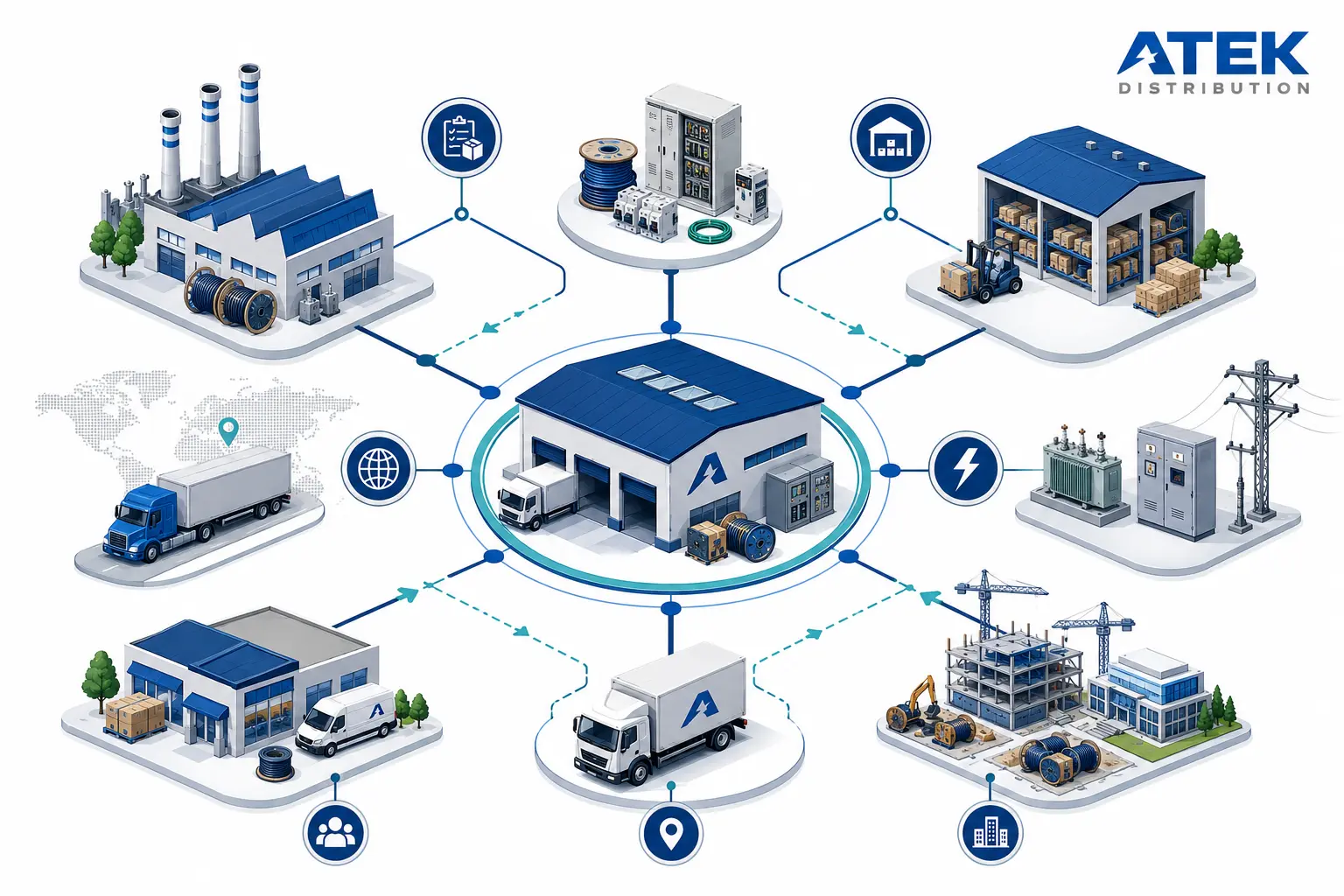
Why Supply Chain Reliability Matters Today
Shift from Price to Reliability
Not long ago, procurement decisions were dominated by one factor: price. The lowest bidder often won the contract. But that mindset is changing fast. Organizations are now realizing that the cheapest supplier is not always the most cost-effective partner in the long run.
Today, reliability has become the real currency of procurement. Companies are no longer asking only "How much does it cost?" They are asking deeper operational questions about execution, consistency, and risk handling. Can the vendor deliver under pressure? Can they respond quickly when something goes wrong? Can they anticipate disruptions before they happen?
This shift is especially visible in industries like healthcare, manufacturing, and energy, where downtime is extremely expensive. A slightly higher-priced but reliable supplier often results in significantly lower total operational cost compared to a cheaper but inconsistent one.
The Real Cost of Disruptions
Supply chain disruptions are rarely isolated events. They trigger ripple effects across entire operations. According to industry research such as Gartner insights on operational risk, disruptions can cost businesses between 6% and 10% of annual revenue depending on sector exposure. In high-risk industries, that number can be even higher.
But the real cost goes beyond financial loss. It includes:
- Emergency procurement at inflated prices
- Overtime labor costs due to delays
- Production downtime and missed deadlines
- Customer dissatisfaction and contract penalties
- Reputational damage that affects future business
Most organizations underestimate these hidden costs until they experience them firsthand. A single missed delivery window can create a domino effect that takes days or even weeks to stabilize.
What Breaks Supply Chains in Real-World Operations
Inventory Visibility Gaps
One of the most common reasons supply chains fail is poor visibility. Many vendors still operate on outdated systems where inventory status is not updated in real time. As a result, customers only learn about shortages after placing orders.
This reactive model creates frustration and inefficiency. Instead of planning ahead, procurement teams are forced into constant firefighting mode. Modern supply chains require transparency, not surprises.
Single-Source Dependency Risks
Another major weakness is over-reliance on a single supplier or manufacturer. When that single source faces delays, shortages, or shutdowns, the entire chain collapses.
Organizations without backup sourcing strategies often find themselves stuck in long waiting cycles. A resilient supply chain always includes pre-qualified alternative suppliers who can step in when needed.
Communication Failures Between Stakeholders
Communication breakdown is one of the most underrated causes of supply chain disruption. In many cases, procurement teams, logistics providers, and end customers operate in silos.
This lack of coordination leads to missed updates, delayed responses, and confusion about order status. Reliable supply chains are built on structured communication systems where updates are proactive, not reactive.
What True Supply Chain Reliability Looks Like
Proactive Communication Systems
Reliable supply chain partners do not wait for customers to ask for updates. They actively communicate order status, risks, and changes in advance.
This includes:
- Order confirmation updates
- Shipment milestone tracking
- Early warnings about delays
- Transparent explanations when issues arise
Proactive communication transforms uncertainty into control. It builds trust and reduces operational stress on both sides.
Early Risk Detection Mechanisms
Strong supply chain systems continuously monitor risk factors such as supplier capacity, shipping delays, and regional disruptions. The goal is to identify problems before they reach the customer.
This requires a combination of technology and human expertise. Data systems can detect anomalies, but experienced professionals interpret what those signals mean in real operational terms. Together, they create a predictive rather than reactive supply chain model.
Fast Alternative Sourcing Capability
When a product becomes unavailable, speed matters more than anything else. Reliable suppliers maintain a network of pre-qualified alternative vendors who can be activated immediately.
This is not just about having contacts in a database. It is about having real operational relationships that allow fast substitution without compromising quality or compliance. ATEK Distribution maintains a network of trusted supply partners for exactly this reason — so customers never face a dead end when a critical product becomes unavailable.
End-to-End Accountability Model
Many supply chains fail not at the point of order placement, but after shipment. Once the product leaves the warehouse, accountability often disappears.
Service-first organizations operate differently. They remain responsible until the product is delivered, verified, and confirmed as usable by the customer. This closed-loop accountability ensures that no issue is left unresolved.
Industry Dependence on Reliable Supply Chains
Healthcare and Patient-Critical Operations
Healthcare is one of the most sensitive environments for supply chain failure. Hospitals depend on a constant flow of medical supplies, equipment, and consumables.
A delayed delivery is not just a logistical issue — it can affect patient treatment timelines and surgical schedules. In this sector, reliability directly impacts human life, making supply chain performance a clinical necessity rather than a business advantage.
Manufacturing, Utilities, and Infrastructure
Manufacturing plants operate on tightly scheduled production cycles. A missing component can halt entire assembly lines, causing financial losses and contractual delays.
Utilities and infrastructure providers face similar challenges. Whether it is power generation or water supply systems, downtime is not an option. These industries require uninterrupted access to critical components and maintenance supplies.
In both cases, supply chain reliability determines operational continuity.
A real-world example of this principle in action comes from ATEK Distribution, a Minneapolis-based electrical and MRO distributor serving government and enterprise customers. Facing the challenge of scaling their operations internationally, the company focused on building a more structured and visible digital supply presence. The results were significant — international active users of their platform grew by 143%. Their story was recognized by the U.S. International Trade Administration as a model of disciplined, service-first growth. It is a clear example of what happens when an organization prioritizes reliability and structure over shortcuts.
Reliability vs Price: The Procurement Reality
The assumption that lower price equals better value is one of the most expensive misconceptions in procurement strategy.
When evaluating total cost, organizations must consider:
- Cost of delays
- Emergency procurement expenses
- Production losses
- Administrative overhead
- Customer relationship damage
A reliable supplier with slightly higher pricing often delivers significantly lower total cost of ownership. This is because operational stability eliminates hidden expenses that are not visible on invoices.
The smartest procurement teams now evaluate vendors based on consistency, responsiveness, transparency, expertise, and trustworthiness — rather than price alone.
Building a More Resilient Supply Chain System
Resilience is not built overnight. It requires intentional evaluation of vendors, processes, and communication systems.
Organizations should start by asking hard questions:
- Do suppliers communicate proactively or reactively?
- Are alternative sourcing options available when needed?
- Is risk identification happening early enough to act on it?
- Is accountability maintained beyond shipment?
If the answers reveal gaps, the supply chain is not resilient — it is fragile.
A resilient supply chain is not defined by the absence of problems, but by how quickly and effectively those problems are resolved.
Vendor Audit Checklist for Reliability
Before finalizing or continuing a supplier relationship, organizations should evaluate:
- Consistency of on-time delivery performance
- Quality and accuracy of fulfilled orders
- Speed of issue resolution
- Transparency in communication
- Depth of sourcing network
These criteria separate transactional vendors from true supply chain partners.
Conclusion
Supply chain reliability has become the backbone of modern operational success. It determines whether organizations can maintain continuity or face costly interruptions. In mission-critical industries, reliability is no longer optional — it is the foundation of performance, trust, and long-term sustainability.
Organizations that prioritize proactive communication, risk awareness, alternative sourcing, and accountability consistently outperform those that focus only on price. Over time, the difference compounds into stronger operations, fewer disruptions, and more predictable outcomes.
FREQUENTLY ASKED QUESTIONS
What is supply chain reliability?
Supply chain reliability refers to the consistent ability of a supplier to deliver the right products on time, in the correct quantity, and without disruption. It ensures smooth operational continuity across industries.
Why is supply chain reliability important?
It reduces downtime, prevents operational delays, and minimizes hidden costs like emergency procurement and production losses. It is especially critical in healthcare, manufacturing, and infrastructure sectors.
How do companies measure supply chain reliability?
Common metrics include on-time delivery rate, order accuracy, lead time consistency, and issue resolution speed. Advanced organizations also track communication responsiveness and risk detection efficiency.
What causes most supply chain failures?
Common causes include poor inventory visibility, over-reliance on single suppliers, weak communication systems, and lack of contingency planning.
Is reliability more important than price in procurement?
Yes, in most mission-critical industries. While price matters, reliability often determines total cost of ownership and long-term operational efficiency